
Innovate. What is innovation? Looking for something new that improves the traditional way of doing things? In my case, as a teacher, that means looking for something that improves the teaching-learning process. What if the innovation is equal to re-teach and learn as it was done years ago …? This is the proposal I made to our director, Mr. Norman when I told him about an Outdoor Learning Space at our school. However, it was not something new for him…
Last week I had the opportunity to go to Beijing for training, to observe a project that has been developed during this year in our sister school, Canadian International School of Beijing. My colleague Silvia Jimenez, teacher and psychologist, has created a very special space where early years children can play, learn, develop their social-emotional skills, experiment with natural elements and be outdoors. Why is this space so important? To answer this question, I am going to quote “Outdoor Classroom Day”, when they say “When teachers take learning, they report some powerful impact.” Children’s behavior improves, whole classes are excited to learn, and individuals who feel inhibited by the curriculum often thrive in an outdoor environment.
When adults think back to their own happiest childhood memories, they frequently recall the joy of playing outdoors. Play is not only central to children’s enjoyment of childhood but teaches critical life skills such as problem-solving, teamwork and creativity “
We create schools, we put children in schools and that’s great, but we forget that children are children and need to play outside! And it was already said by J. Piaget: “Children do not play to learn, but learn because they play.”
All these things were not new to our director, Mr. Norman, after in 1976 he developed, an “Outdoor Education Program” related to sports and the development of leadership skills in children and young people. Hence, his response to my proposal was: When do you want to leave? How exiting! Maybe it was a similar feeling for Silvia in our school in Pekin when last year as Kindergarten Homeroom teacher held some different workshops that ended in a more solid proposal. As a facilitator, now Silvia works exclusively in the outdoor learning space with kindergarden classrooms. My days in Beijing with her have reinforced my idea about the importance of this space for children, for our school.
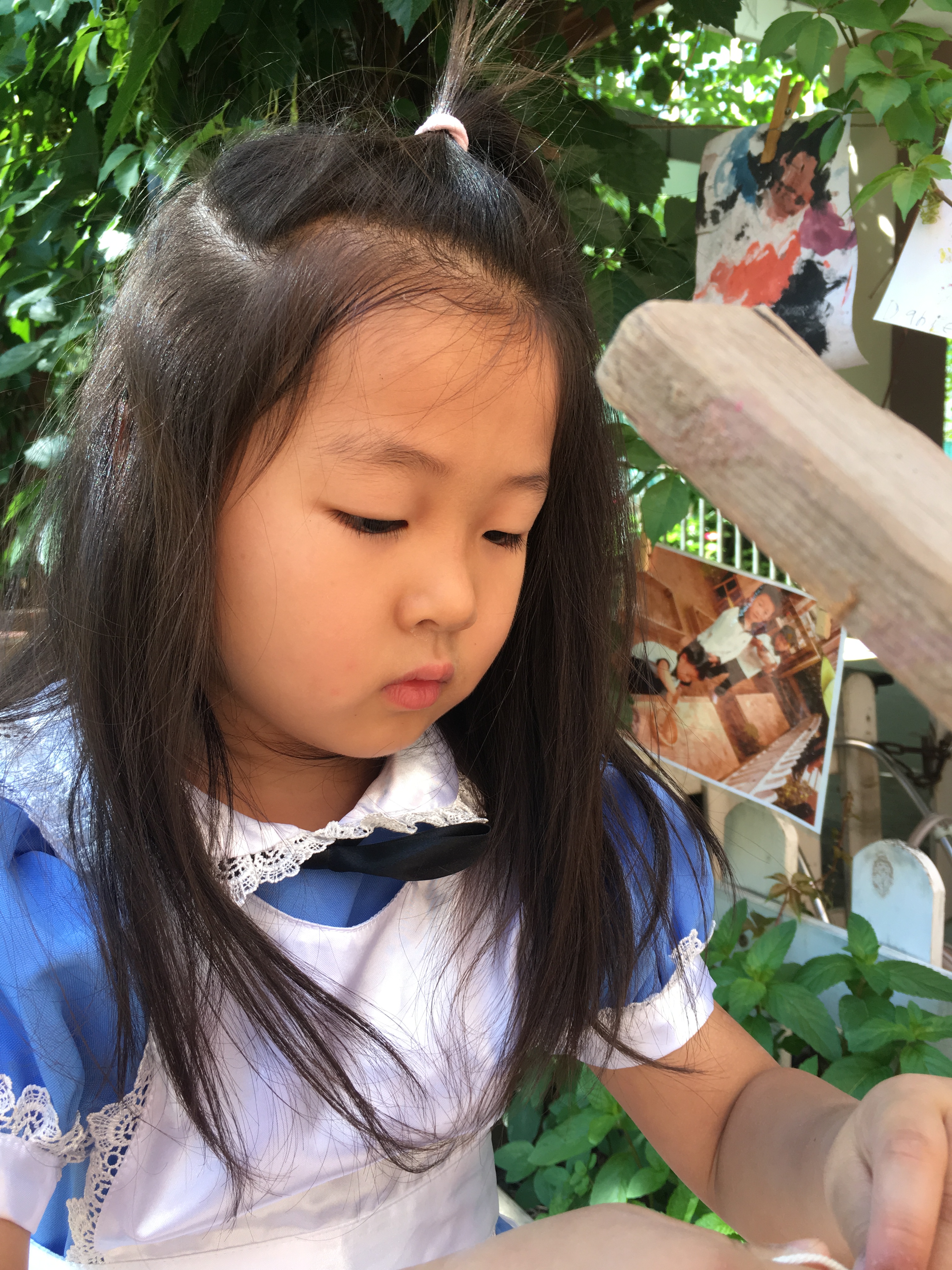
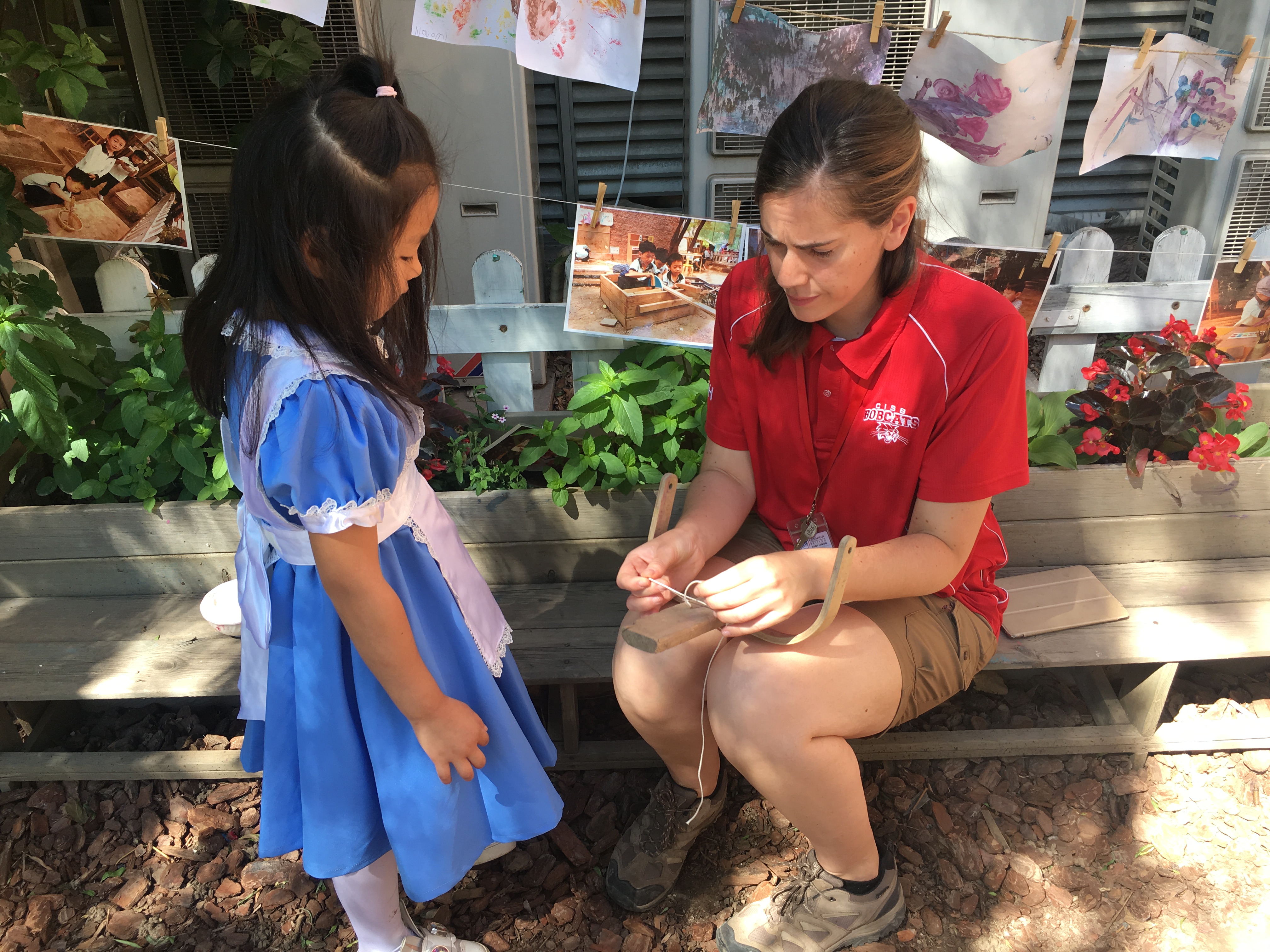
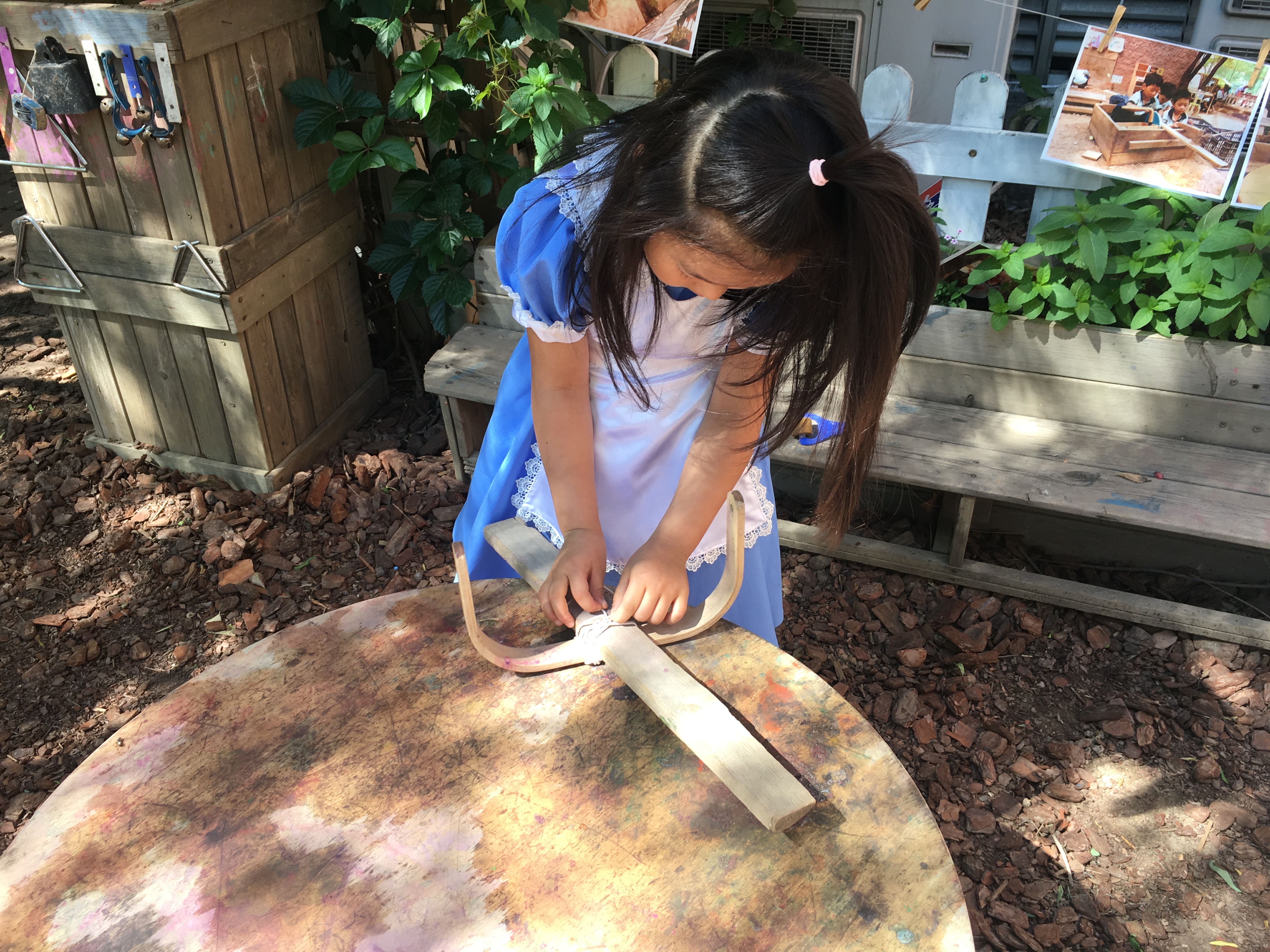
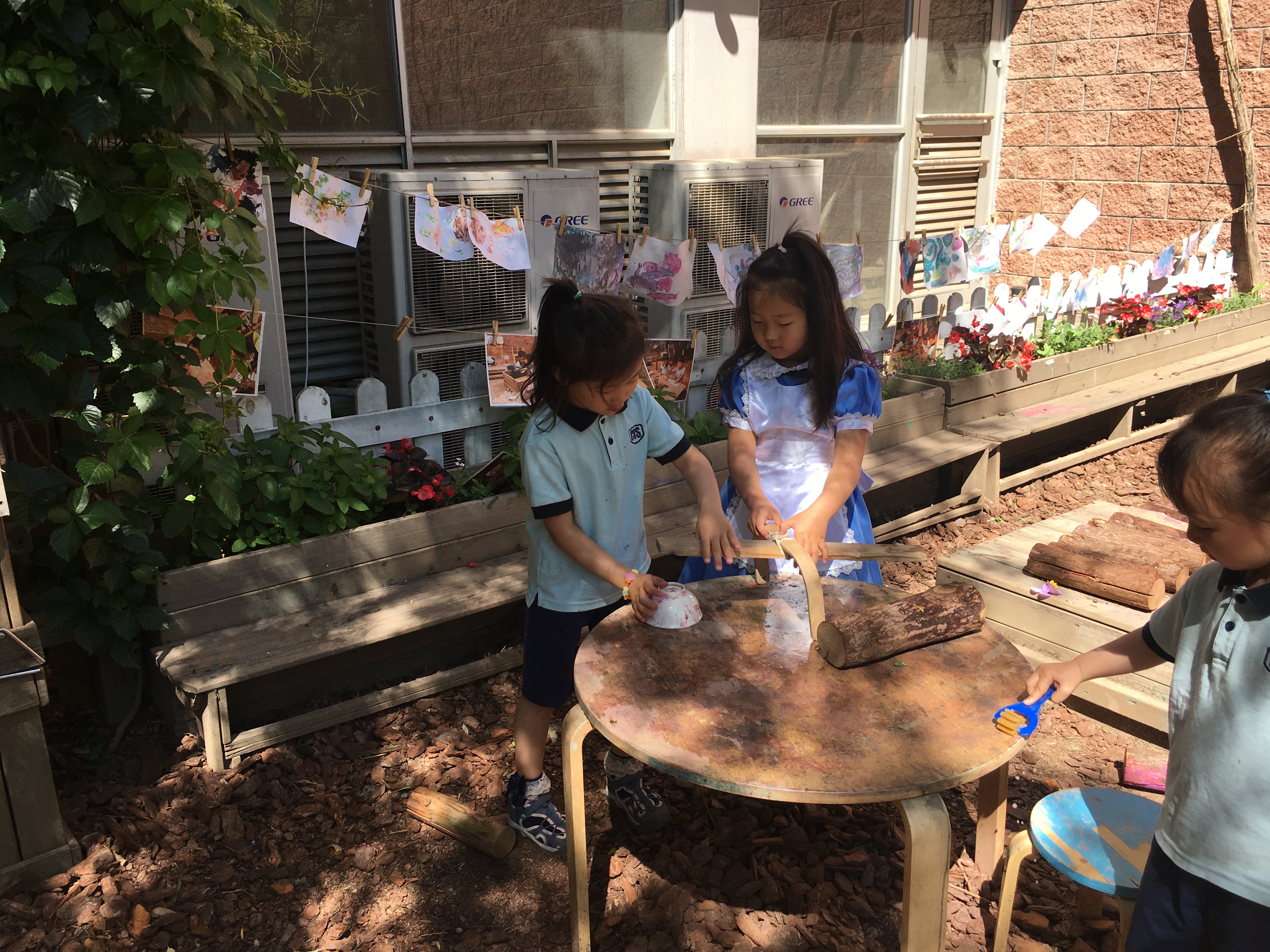
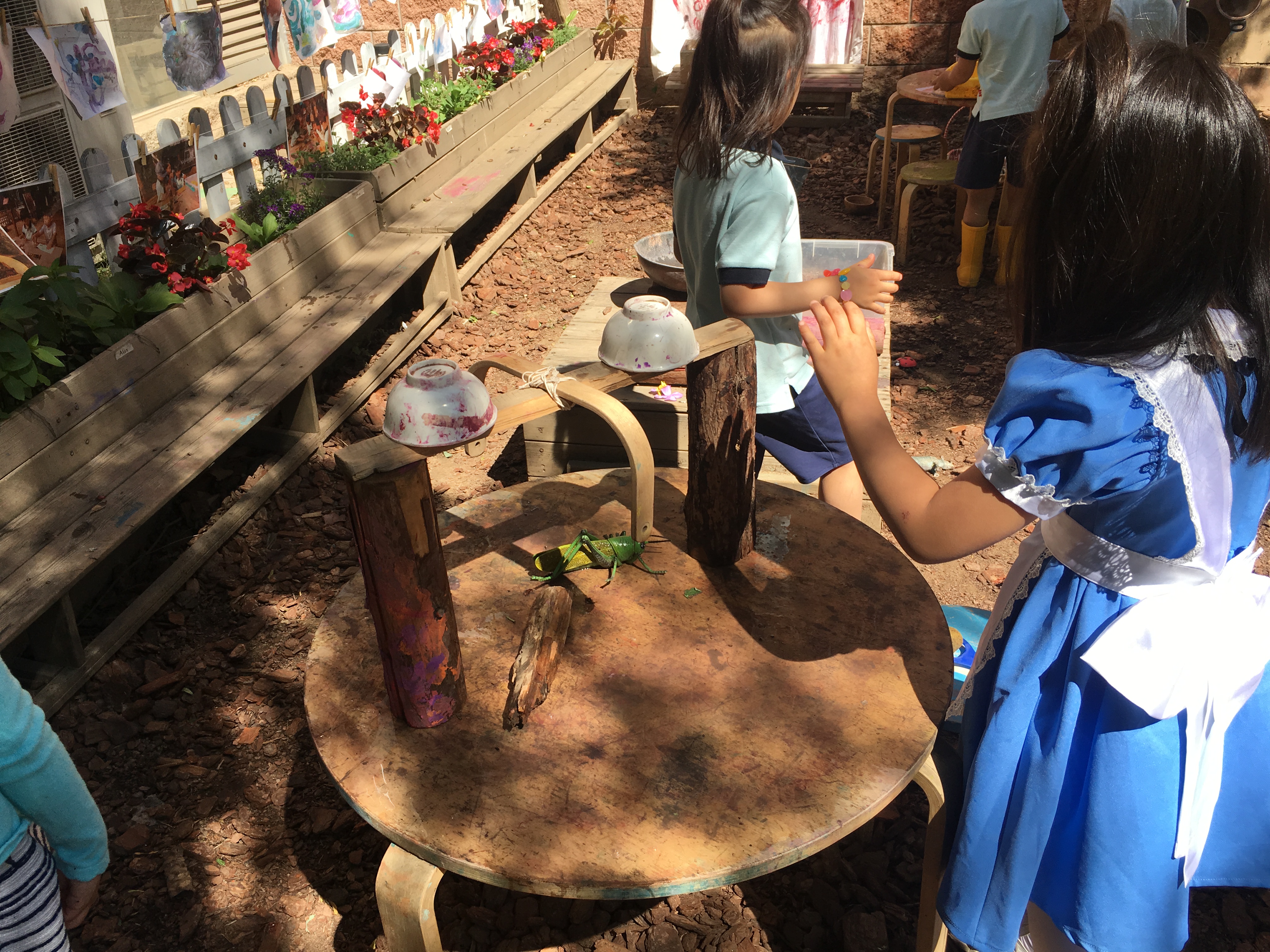
Silvia uses to start early, always preparing her classroom: is there enough paint? Everything is in place? Maybe if you go for the first time your adult eyes only see a broken wooden stool, an old pan full of mud, a bench on wheels, … but if you stay watching the children play, you will see that the legs of the broken bank are helping a girl dressed as Alice in Wonderland to build a rocker. The pan has been used to transport water and mix colors, and the wheels and the bench for a girl to jump again and again higher and higher … do you still not see? Now I am going to tell you what I saw with my teacher’s eyes: I saw a girl, experimenting with different materials and observing how these work together, for me that is scientific thinking and scientific skills. Some children practicing their social-emotional skills. And the girl who jumped, tested her limits, her strength, her balance, … it was a challenge for herself, self-knowledge, overcoming. For me that is kinesthetic and intrapersonal intelligence.
It is in human nature to be outside in nature, it is in human nature that play is the first resource for learning.
If you are a teacher, … stop, take a moment and please think: what activity can you plan in class that can achieve all this with so few materials? I invite you to close your eyes as an adult, and open your eyes as a child and teacher and take your children a few minutes away … you will see that time passes as in the story of Alice, children will never tell you that they are bored and the pedagogical possibilities of this space will be infinite. Do you want to come to play?
 CISS Teacher's Blog